
Plant Nutrition & Fertilizers
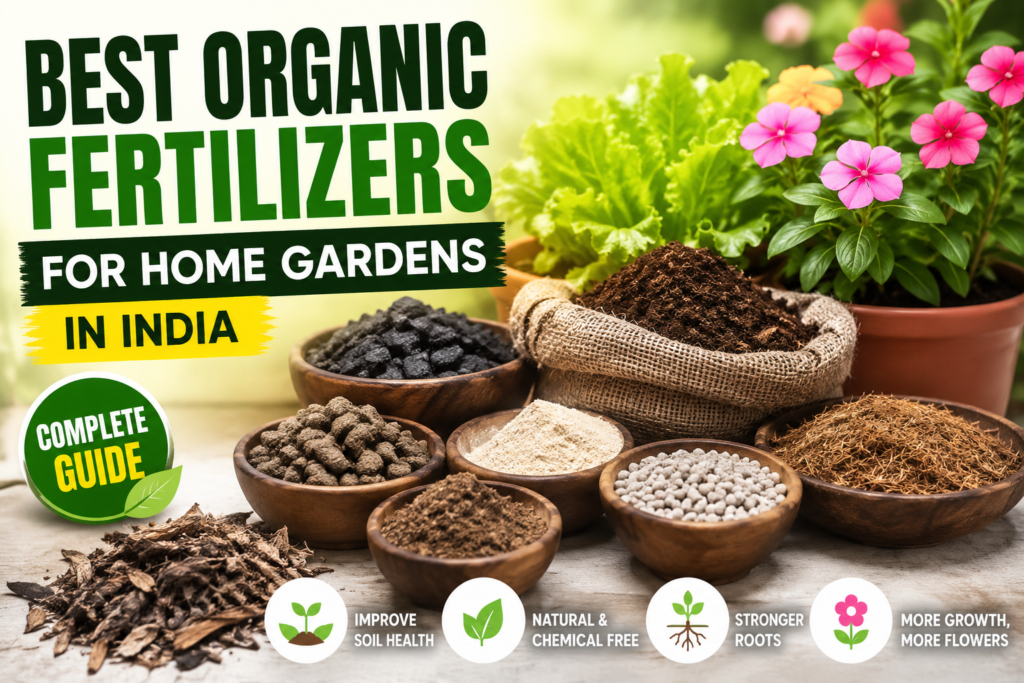
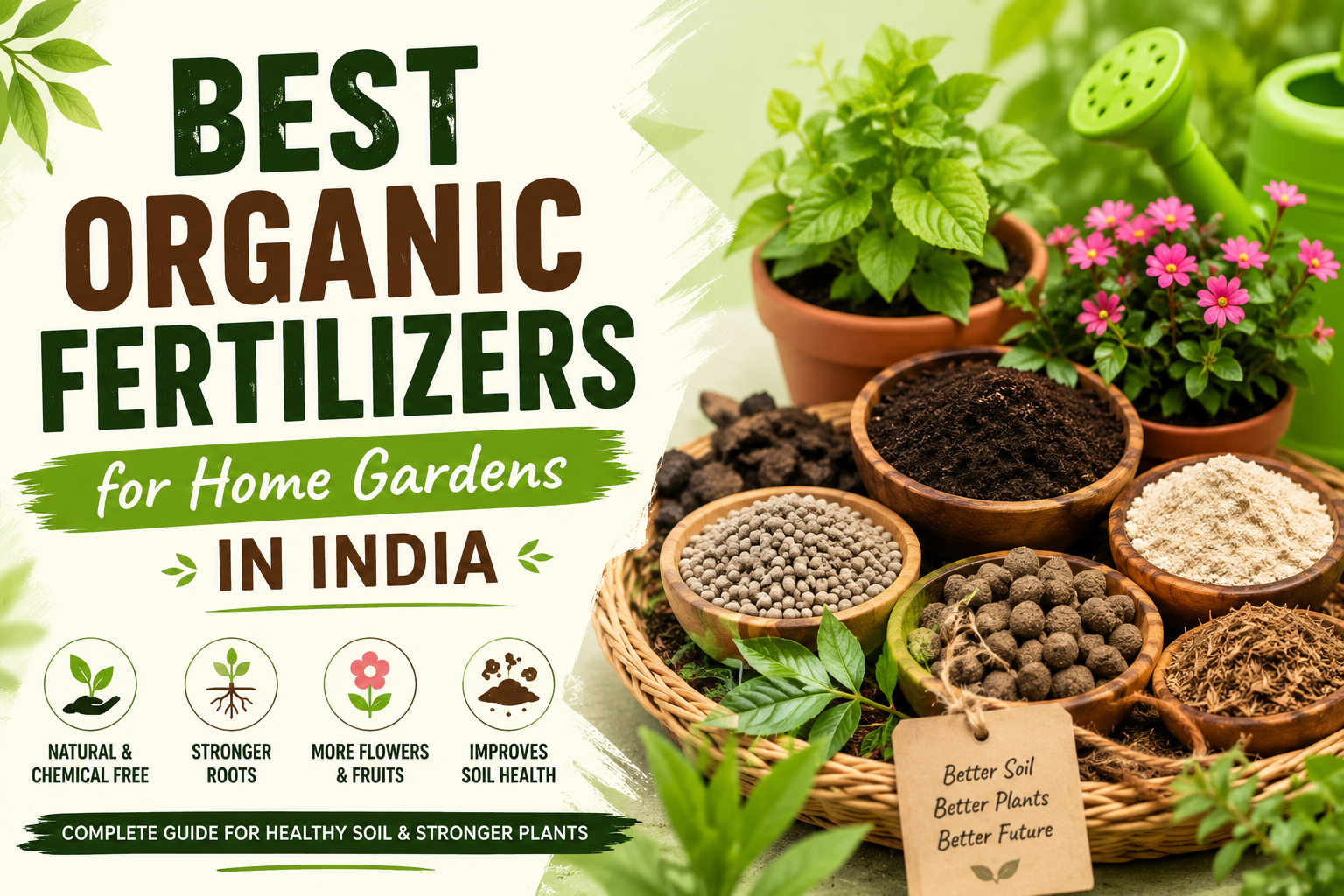
Best Organic Fertilizers for Home Gardens in India: Complete Guide
Jul
Discover the best organic fertilizers for home gardens in India. Learn how compost, vermicompost, neem cake, bone meal, seaweed extract, humic acid and other natural fertilizers improve soil health and support healthier plants.
Quick Answer
The best organic fertilizers for home gardens in India include compost, vermicompost, neem cake, bone meal, potash meal, seaweed extract, humic acid and mycorrhiza. Each fertilizer serves a different purpose, from improving soil fertility and root growth to supporting flowering and nutrient uptake. Choosing the right organic fertilizer depends on your plants, soil condition and gardening goals.
Key Takeaways
- Organic fertilizers improve soil health over time.
- Healthy soil produces healthier plants and better yields.
- No single fertilizer is ideal for every plant.
- Different organic fertilizers supply different nutrients.
- Combining multiple organic fertilizers often provides better long-term results.
- Healthy roots are the foundation of healthy plants.
- Organic gardening supports beneficial microorganisms.
Best Organic Fertilizers for Home Gardens in India
Organic gardening is becoming increasingly popular among home gardeners in India. Whether you grow vegetables, flowering plants, herbs, fruit trees or indoor plants, maintaining healthy soil is essential for long-term success. Unlike synthetic fertilizers that mainly provide nutrients, organic fertilizers improve soil structure, encourage beneficial microorganisms and gradually release nutrients that plants can absorb over time.
Choosing the best organic fertilizers for home gardens in India depends on your soil type, the plants you grow and their nutritional requirements. Compost, vermicompost, neem cake, bone meal, seaweed extract, humic acid and mycorrhiza all play different roles in building healthy soil and supporting vigorous plant growth.
In this guide, you'll learn how organic fertilizers work, their benefits, how to choose the right one for your garden and when each fertilizer should be used for the best results.
What Are Organic Fertilizers?
Organic fertilizers are natural materials derived from plant, animal or mineral sources that provide nutrients to plants while improving soil health. Unlike synthetic fertilizers, many organic fertilizers also increase organic matter, improve soil structure and encourage beneficial microbial activity.
Some organic fertilizers release nutrients slowly as microorganisms break them down, providing a more gradual nutrient supply. This helps maintain long-term soil fertility and reduces the risk of nutrient leaching when used appropriately.
Why Choose Organic Fertilizers for Home Gardens?
Organic fertilizers do much more than simply feed plants. They improve soil quality, support beneficial microbes, increase water-holding capacity and contribute to a healthier growing environment. For home gardeners, this means stronger roots, healthier plants and more sustainable gardening practices.
| Benefit | How Organic Fertilizers Help |
|---|---|
| Soil Health | Improve soil structure and organic matter. |
| Root Growth | Support stronger and healthier root systems. |
| Water Retention | Increase the soil's ability to hold moisture. |
| Microbial Activity | Encourage beneficial bacteria and fungi. |
| Sustainable Gardening | Reduce dependence on synthetic inputs. |
Organic Fertilizers vs Chemical Fertilizers
Both organic and chemical fertilizers supply nutrients, but they work differently. Organic fertilizers gradually improve soil health and release nutrients over time, while chemical fertilizers generally provide nutrients more quickly. Many successful home gardens combine healthy soil management with appropriate fertilization based on plant needs.
| Organic Fertilizers | Chemical Fertilizers |
|---|---|
| Improve soil health | Quick nutrient availability |
| Increase beneficial microbes | Higher nutrient concentration |
| Improve soil structure | Do not significantly improve soil structure |
| Long-term soil fertility | Immediate plant nutrition |
8 Best Organic Fertilizers for Home Gardens in India
Organic fertilizers are not all the same. Some primarily supply nutrients, while others improve soil health, encourage beneficial microorganisms, or increase nutrient availability. Using the right combination helps create healthier plants and more productive gardens.
1. Vermicompost
Vermicompost is one of the most popular organic fertilizers used by home gardeners. Produced by earthworms, it contains plant nutrients, beneficial microbes, enzymes, and organic matter that improve soil fertility naturally.
Best For
- Vegetable gardens
- Flowering plants
- Indoor plants
- Seedlings
- Container gardening
Benefits
- Improves soil structure
- Enhances microbial activity
- Slow-release nutrition
- Supports healthy root development
- Improves moisture retention
2. Neem Cake Powder
Neem Cake is an excellent organic fertilizer and soil conditioner made from neem seeds after oil extraction. It slowly releases nutrients while improving soil health and supporting beneficial microorganisms.
Best For
- Vegetables
- Flowering plants
- Fruit plants
- Potted plants
- Raised beds
Benefits
- Provides slow-release nutrients
- Improves soil fertility
- Supports healthy root growth
- Improves microbial activity
- Helps maintain healthier soil ecosystems
Learn more in our detailed guide: Neem Cake for Natural Pest Control
3. Bone Meal
Bone Meal is a traditional organic fertilizer rich in phosphorus and calcium. It supports root development, flower bud formation and healthy plant establishment.
Best For
- Roses
- Hibiscus
- Bulb plants
- Flower beds
- Fruit trees
Benefits
- Supports root growth
- Encourages flower bud formation
- Provides calcium
- Long-lasting nutrient source
- Suitable before planting
4. Potash Meal
Potassium plays an essential role in flowering, fruit quality and overall plant health. Organic Potash Meal supplies potassium gradually while supporting healthy flowering and stronger plants.
Best For
- Flowering plants
- Tomatoes
- Chillies
- Fruit plants
- Vegetable gardens
Benefits
- Supports flower development
- Improves fruit quality
- Strengthens stems
- Improves stress tolerance
- Supports balanced plant nutrition
Related Guides
5. Seaweed Extract
Seaweed Extract is a natural biostimulant made from marine algae. While it is not a complete fertilizer, it helps plants tolerate stress, encourages vigorous growth and improves nutrient utilization.
Best For
- Flowering plants
- Vegetable gardens
- Fruit plants
- Indoor plants
- Seedlings and transplants
Benefits
- Improves plant vigor
- Supports root development
- Enhances stress tolerance
- Improves nutrient efficiency
- Supports flowering and fruit development
6. Humic Acid
Humic Acid is a natural soil conditioner that improves nutrient availability and soil health. Rather than supplying significant nutrients itself, it helps plants absorb nutrients already present in the soil or supplied through fertilizers.
Best For
- Poor soils
- Container gardens
- Vegetable plants
- Flowering plants
- Fruit trees
Benefits
- Improves nutrient uptake
- Supports root growth
- Improves soil structure
- Increases microbial activity
- Improves water retention
Learn more in our guide:Humic Acid for Plants
7. Mycorrhiza
Mycorrhiza is a beneficial fungus that forms a natural partnership with plant roots. It extends the root system, helping plants absorb water and nutrients more efficiently.
Best For
- Vegetables
- Fruit trees
- Flowering plants
- Container gardening
- New plantings
Benefits
- Stronger root systems
- Improved nutrient absorption
- Better drought tolerance
- Supports long-term soil health
- Improves plant establishment
Read our complete guide:Mycorrhiza Fertilizer: Uses, Benefits & Price in India
8. Gypsum
Gypsum is a natural soil amendment rather than a complete fertilizer. It supplies calcium and sulfur while helping improve soil structure, especially in compact or clay-rich soils.
Best For
- Clay soils
- Compacted gardens
- Vegetable beds
- Fruit plants
- Flower gardens
Benefits
- Provides calcium and sulfur
- Improves soil structure
- Supports healthy root growth
- Improves drainage in heavy soils
- Complements organic fertilizers
Comparison of Organic Fertilizers
| Product | Primary Benefit | Best For |
|---|---|---|
| Vermicompost | General nutrition | All plants |
| Neem Cake | Soil health | Vegetables & Flowers |
| Bone Meal | Roots & Flowers | Flowering plants |
| Potash Meal | Potassium nutrition | Flowering & Fruiting plants |
| Seaweed Extract | Biostimulant | All plants |
| Humic Acid | Nutrient uptake | Poor soils |
| Mycorrhiza | Root development | New plantings |
| Gypsum | Calcium & Soil Structure | Heavy soils |
Which Organic Fertilizer Should You Choose?
| If Your Garden Needs... | Recommended Product |
|---|---|
| General soil fertility | Vermicompost |
| Better root development | Bone Meal + Mycorrhiza |
| Healthier soil | Neem Cake |
| Improved nutrient absorption | Humic Acid |
| Plant stress management | Seaweed Extract |
| Heavy clay soil | Gypsum |
| Better flowering & fruiting | Potash Meal |
Why Organic Fertilizers Work Together
Healthy gardens rely on more than just supplying nutrients. Organic fertilizers improve soil organic matter, encourage beneficial microorganisms and support nutrient cycling. Products like Vermicompost and Neem Cake enrich the soil, Bone Meal and Potash Meal provide essential nutrients, while Humic Acid, Seaweed Extract and Mycorrhiza help plants use those nutrients more efficiently. Combining these products thoughtfully creates healthier soil and more resilient plants over time.
How to Apply Organic Fertilizers in Home Gardens
Organic fertilizers work best when applied consistently and according to your plant's growth stage. Preparing healthy soil before planting and replenishing nutrients throughout the growing season helps maintain long-term soil fertility and supports healthier plants.
- Remove weeds and loosen the soil before application.
- Mix compost or vermicompost into the topsoil.
- Apply Neem Cake before planting or around established plants.
- Use Bone Meal while planting flowering plants or fruit trees.
- Apply Potash Meal before flowering and fruit development.
- Mix Mycorrhiza close to plant roots during transplanting.
- Apply Humic Acid according to label recommendations.
- Spray Seaweed Extract during active growth or plant stress.
General Application Guide
| Product | Best Time | Application Frequency |
|---|---|---|
| Vermicompost | Before planting | Every 30–45 days |
| Neem Cake | Before planting / Top dressing | Every 45–60 days |
| Bone Meal | Planting & Bud Formation | Every 2–3 months |
| Potash Meal | Flowering & Fruiting | Monthly during season |
| Seaweed Extract | Active Growth | Every 15–20 days |
| Humic Acid | Growing Season | Every 20–30 days |
| Mycorrhiza | At Planting | Usually once |
| Gypsum | Soil Preparation | As required |
Benefits of Organic Fertilizers
- Improve soil fertility naturally.
- Support beneficial microorganisms.
- Improve soil structure and aeration.
- Increase water-holding capacity.
- Promote stronger root systems.
- Reduce nutrient leaching.
- Support long-term sustainable gardening.
- Suitable for vegetables, flowers, fruits and herbs.
Limitations of Organic Fertilizers
- Generally release nutrients more slowly than synthetic fertilizers.
- Different products supply different nutrients.
- Results depend on soil biology and environmental conditions.
- Some products require repeated applications.
- Balanced nutrient management is still important.
Common Mistakes to Avoid
- Using only one fertilizer for every plant.
- Ignoring soil health.
- Over-applying organic fertilizers.
- Skipping regular watering after application.
- Ignoring plant growth stages.
- Applying fertilizers to stressed plants.
- Not improving compacted soil.
GreenKheti Expert Tips
- Build healthy soil before trying to increase yields.
- Combine organic fertilizers instead of relying on one product.
- Monitor plant growth regularly.
- Improve soil biology for long-term garden health.
- Feed the soil—not just the plant.
Recommended Organic Gardening Products
These GreenKheti products can help improve soil health and support healthy plant growth when used appropriately.
Need Help with Your Plant?
Not sure why your plant isn't growing well?
The GreenKheti AI Plant Care Bot can help you:
- Diagnose plant problems from photos.
- Identify pests and diseases.
- Recommend suitable fertilizers.
- Provide watering and care advice.
- Answer gardening questions instantly.
Frequently Asked Questions
1. Which is the best organic fertilizer for home gardens in India?
There isn't a single best fertilizer for every garden. Vermicompost, Neem Cake, Bone Meal, Potash Meal and Seaweed Extract all serve different purposes. The right choice depends on your plants, soil condition and gardening goals.
2. Are organic fertilizers better than chemical fertilizers?
Organic fertilizers improve soil health, encourage beneficial microorganisms and release nutrients gradually. Chemical fertilizers generally provide nutrients more quickly but do not significantly improve soil structure.
3. Can I grow vegetables using only organic fertilizers?
Yes. Many home gardeners successfully grow vegetables using compost, vermicompost, neem cake, bone meal and other organic fertilizers when used appropriately.
4. Which organic fertilizer is best for flowering plants?
Flowering plants often benefit from Bone Meal, Potash Meal, Seaweed Extract and Vermicompost combined with healthy soil management.
5. Is Neem Cake only used for pest control?
No. Neem Cake is also an excellent organic fertilizer that improves soil health while supplying nutrients and supporting beneficial microorganisms.
6. What is the difference between Humic Acid and organic fertilizer?
Humic Acid is primarily a soil conditioner that improves nutrient availability. It is commonly used alongside fertilizers rather than replacing them.
7. Can Seaweed Extract replace NPK fertilizers?
No. Seaweed Extract is a biostimulant that supports plant health but does not provide complete plant nutrition like balanced fertilizers.
8. How often should organic fertilizers be applied?
The application schedule depends on the product, plant species and growing conditions. Always follow the manufacturer's instructions.
9. Is Mycorrhiza an organic fertilizer?
Mycorrhiza is commonly classified as a biofertilizer because beneficial fungi improve nutrient and water absorption through a natural partnership with plant roots.
10. Can I mix different organic fertilizers?
Yes. Many gardeners combine complementary products such as Vermicompost, Neem Cake and Bone Meal to support balanced nutrition and healthy soil.
11. Are organic fertilizers safe for indoor plants?
Yes. Organic fertilizers can be used for indoor plants when applied in suitable quantities according to the product instructions.
12. Which organic fertilizer improves soil fertility the most?
Vermicompost and Neem Cake are widely used to improve soil fertility because they add organic matter while encouraging beneficial microbial activity.
13. Can organic fertilizers burn plants?
Although generally gentler than synthetic fertilizers, excessive application of organic fertilizers may still create nutrient imbalances or damage plants.
14. Do organic fertilizers work slowly?
Many organic fertilizers release nutrients gradually as soil microorganisms decompose organic matter, providing long-term nutrition.
15. Should I perform a soil test before applying fertilizers?
Yes. A soil test helps identify nutrient deficiencies and soil pH, making it easier to choose suitable fertilizers and avoid unnecessary applications.
Conclusion
The best organic fertilizers for home gardens in India are those that improve both plant nutrition and long-term soil health. Rather than relying on a single product, combining organic fertilizers such as Vermicompost, Neem Cake, Bone Meal, Potash Meal, Seaweed Extract, Humic Acid, and Mycorrhiza provides balanced nutrition while supporting beneficial soil microorganisms.
Every garden is different, so choose fertilizers based on your plant type, soil condition, and growth stage. Healthy soil leads to stronger roots, healthier plants, better flowering, and higher vegetable yields over time.
If you're unsure which fertilizer your plants need, use the GreenKheti AI Plant Care Bot to identify nutrient deficiencies, diagnose plant problems, and receive personalized fertilizer recommendations based on your plants.
References
- Indian Council of Agricultural Research (ICAR)
- ICAR – Indian Agricultural Research Institute (IARI)
- ICAR – Indian Institute of Horticultural Research (IIHR)
- Soil Health Management – Department of Agriculture & Farmers Welfare
- Tamil Nadu Agricultural University (TNAU) – Agritech Portal
- Food and Agriculture Organization (FAO)
- Royal Horticultural Society (RHS)
